
TEMPLE, TX — If you are still clinging to the mid-century romance of local constituent service, institutional incumbency, or ideological independence, the state-certified ledgers from May 19, 2026, should act as a cold bucket of reality. Across six states—Kentucky, Pennsylvania, Georgia, Alabama, Oregon, and Idaho—the primary process was stripped of its localized administrative veneer and converted into a highly weaponized, multi-million-dollar proxy war.
We aren’t looking at a traditional midterm referendum on the White House; we are looking at an ecosystem under severe systemic stress. Caught between persistent domestic inflation, a localized housing affordability crisis, and the escalating naval blockades of the Iran conflict, the American electorate has officially stopped looking for plumbers. They are looking for executioners.
Kentucky’s $32 Million Warning Shot
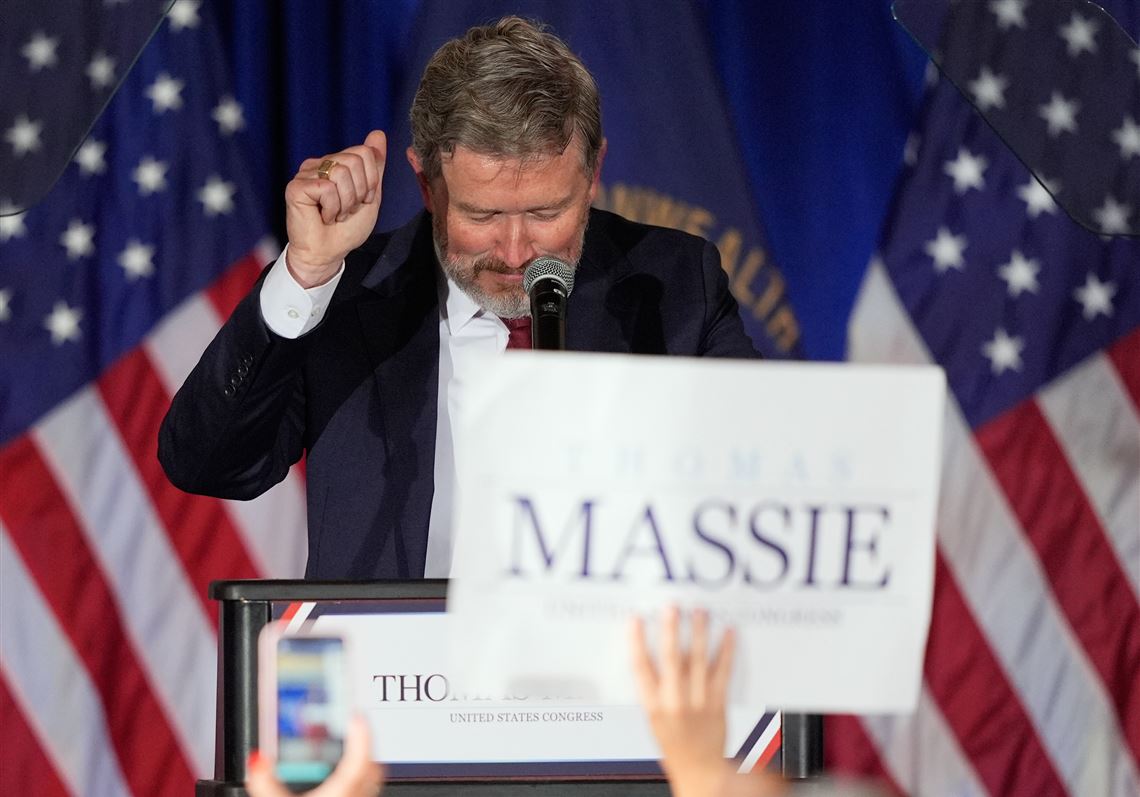
Nowhere was this ideological liquidation more brutal than in Kentucky’s 4th Congressional District. Seven-term incumbent Representative Thomas Massie—a man who spent over a decade meticulously building a brand as an unbendable, anti-establishment constitutional libertarian—was systematically dismantled by Ed Gallrein, a political newcomer and former Navy SEAL.
The arithmetic of Massie’s eviction is a textbook lesson in the financial inelasticity of contemporary Republican primaries:
The 9.6-point collapse of an entrenched incumbent in a safe seat didn’t happen because the voters suddenly turned against the Second Amendment or fiscal restraint. It happened because the national MAGA ecosystem decided to enforce absolute factional fealty. This race became the most expensive U.S. House primary in history, with outside groups pouring over $32 million into a suburban Cincinnati media market. That translates to roughly $307 for every single vote cast in a primary where turnout barely cleared 104,000.
The MAGA Kentucky Super PAC alone deployed more than $25 million in relentless negative media, while Trump’s associated national apparatus injected another $7 million. Massie’s strict anti-interventionist stance on the escalating Iran conflict directly crossed the party’s muscular defense line, prompting Defense Secretary Pete Hegseth to personally travel to Kentucky to campaign for Gallrein, telling voters that the executive branch needs “reinforcements” who “stand behind leaders,” not independent critics.
Compounded by late-breaking localized vulnerabilities—including a public allegation regarding a workplace wrongful termination dispute involving an ally—Massie’s structural defense crumbled. In his concession speech, Massie warned of the rise of “mob rule” over constitutional fidelity. But the mechanics are final: in the modern GOP, you can buck the party platform, but if you buck the factional leader, the apparatus will simply price you out of existence.
Conversely, the establishment proved it could synthesize with the base when the stakes were higher: in the open U.S. Senate primary to replace the retiring Mitch McConnell, Representative Andy Barr secured a dominant 60% victory over former Attorney General Daniel Cameron, setting up a November match against Democratic nominee Charles Booker.
The Bottom-Up Progressive Wedge in Pennsylvania
While the right was purging independent libertarians from the top down, the left in Pennsylvania’s 3rd Congressional District was proving that high-intensity, decentralized grassroots organizing can completely run over an entrenched urban party machine from the bottom up.
In a deep-blue Philadelphia enclave that favored the Democratic ticket by 78 points in 2024, the primary is the election. State Representative Chris Rabb, an insurgent progressive backed by the national “Squad” and the Working Families Party, delivered a decisive blow to State Senator Sharif Street, the literal scion of the Philadelphia Democratic establishment and chair of the state party.
Street entered the arena with the unified backing of Mayor Cherelle Parker, the local AFL-CIO, and a massive financial advantage, outspending Rabb $895,000 to $628,000. Yet, Street failed to even breach the 30% mark. Rabb’s campaign successfully decoupled raw expenditure from electoral outcomes by deploying a highly disciplined ground operation that survived an internal embezzlement scandal within his own campaign coffers.
The primary vector for Rabb’s victory was the internationalization of local politics. Rabb used the ongoing conflict in Gaza as a sharp progressive wedge, aggressively labeling Israel’s actions as a “genocide” and actively targeting groups like AIPAC. Moderate challenger Dr. Ala Stanford—despite self-funding her campaign with a $250,000 loan and securing backing from the 314 Action PAC—was completely paralyzed by progressive accusations that her donors were fronting for national pro-Israel interest groups. Rabb’s win establishes a clear precedent for deep-blue urban primaries: a maximalist, activist-aligned foreign policy posture is a highly efficient vehicle for activating the base.
Georgia’s $100 Million Bloodbath and Runoff Realities
If you want to observe the sheer expenditure of raw capital stripped of any strategic efficiency, look at Georgia. The state remains a demographic and ideological microcosm of the country, but its Republican gubernatorial primary devolved into a financial spectacle that settled nothing and triggered a brutal June 16 runoff.
Billionaire healthcare executive Rick Jackson injected a staggering $83 million of his personal fortune into the Atlanta airwaves, while Lieutenant Governor Burt Jones contributed $19 million of his own family capital. Total primary expenditures breached the $100 million mark—more than double the state’s historical record—yet neither candidate crossed the mandatory 50% threshold.
The definitive takeaway from the Georgia ledger is the complete disqualification of institutional conservatism. Secretary of State Brad Raffensperger, who achieved national prominence for his defense of the 2020 election mechanics, was utterly crushed, scraping together just 14.5% of the vote. Both Jones and Jackson campaigned aggressively on platforms of systemic election skepticism. In contemporary Georgia, institutional defense of the voting infrastructure is a fatal position; the primary base demands a combative posture.
This proxy warfare extends directly to the U.S. Senate primary, where Trump-backed border hawk Representative Mike Collins (41%) will face Derek Dooley (30%), a political outsider heavily recruited by outgoing Governor Brian Kemp’s state-level machine. While incumbent Democratic Senator Jon Ossoff sits entirely uncontested on a $31 million general election war chest, Collins and Dooley will spend the next month draining their resources and trading blows in an extended internal civil war.
Alabama’s Domino Effect and the Rescheduled Maps
In Alabama, the primary was defined by a tactical realignment triggered by Senator Tommy Tuberville’s unprecedented decision to exit the federal stage to run for governor. Tuberville easily captured the GOP gubernatorial nomination with 85% of the vote, but his exit left an open Senate seat that has produced another June 16 runoff bottleneck.
Congressman Barry Moore, a hardline House Freedom Caucus member backed by a late Trump endorsement, led the pack with 39.2%. He will face former Navy SEAL Jared Hudson (25.6%), who managed to edge out state Attorney General Steve Marshall by fewer than 6,000 votes. The ideological spectrum in this race was virtually non-existent; every candidate ran on identical nationalized cultural markers. The race was further complicated by federal judicial intervention, which voided the primary results for four congressional districts under ongoing redistricting litigation, pushing those contests to an August 11 special election date.
The Strategic Ledger for November
As the dust settles on the May 19 data, the libertarian and center-right critique of the modern electoral engine is verified. The middle has not just been vacated; it has been systematically targeted and removed.
The Inelasticity of Capital: Rick Jackson’s $83 million failure proves that cash can buy universal saturation, but it cannot manufacture an authentic political mandate if the candidate lacks an organic connection to the psychological demands of the primary base.
The Efficiency of Negative Spending: The Kentucky results prove that outside PAC money is most lethal when used as a defensive weapon to assassinate character rather than build a policy platform.
The Nationalization of the Ballot: From the library boards of Central Texas to the congressional districts of Philadelphia and the cornfields of Kentucky, the localized constituent contract is dead. The voter is no longer asking what a candidate can do for their district; they are asking which side of the national cultural ledger they are willing to sign with their blood.
The candidates marching toward November are no longer independent legislators. They are disciplined, factional gladiators, and the collision this autumn will be the most expensive, volatile, and deeply polarized market event in modern political history.