
AUSTIN, TX — For over two decades, Senator John Cornyn has served as the steady, immovable center of gravity in Texas Republican politics. He is a creature of the institution, a man who believed that four terms of reliable voting and fundraising prowess offered a shield against the populist whims of the digital age.
Today, the President of the United States decided to shatter that shield.
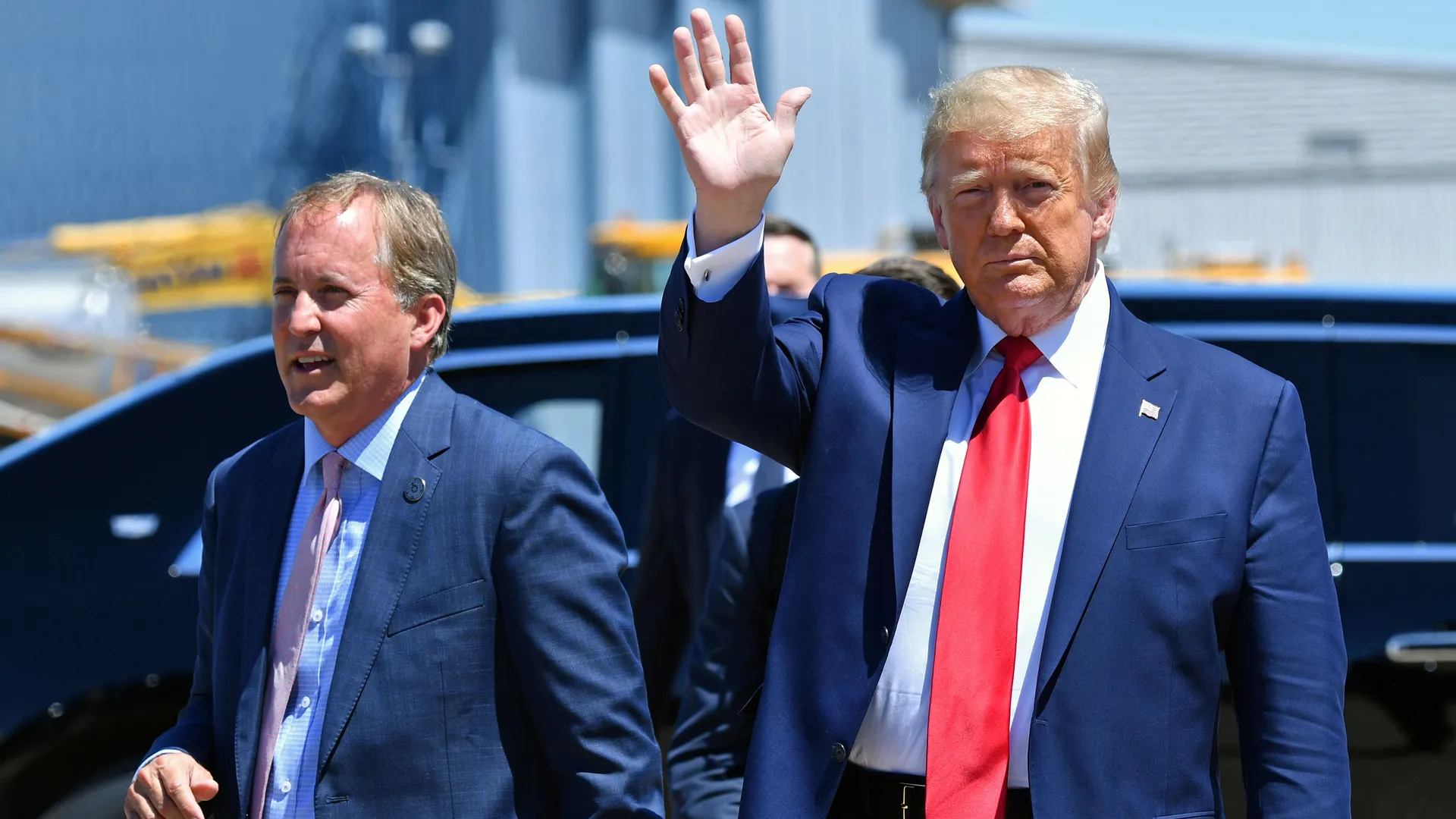
In a maneuver that has sent shockwaves through the limestone halls of Austin and the marbled corridors of Washington, President Donald Trump has officially endorsed Attorney General Ken Paxton in next week’s May 26 Republican primary runoff for the United States Senate.
The “narrative” peddled by the cable news chattering classes will frame this as a mere shifting of the political winds. The truth is that this is the definitive obituary for the Texas political establishment. Loyalty to the executive has officially eclipsed the value of the legislative ledger.
To understand the sheer brutality of this intervention, one must look at the timeline. Just yesterday, a confident Senator Cornyn stood before the press and declared that “the ship has finally sailed” on an executive endorsement, assuring the public that the President had chosen to stay out of the fray so as not to disappoint his base.
Twenty-four hours later, Cornyn was humiliated on the very digital platform he so clearly struggles to comprehend.
Writing on Truth Social—the digital megaphone that now dictates the fate of the Republic—President Trump crowned Paxton a “true MAGA Warrior,” while dismissing the four-term Senator with the faint, damning praise reserved for a discarded employee. “John Cornyn is a good man,” the President wrote, “but he was not supportive of me when times were tough.”
That is the mechanical reality of the modern era. Twenty-three years of institutional competence are rendered utterly worthless if you are perceived as being late to the victory parade.
The elevation of Ken Paxton is a study in political immortality. In any previous era of American history, Paxton’s résumé would be an anvil. He has survived a bruising impeachment by his own party in the Texas House, navigated years of securities fraud investigations, weathered ethics complaints, and is currently conducting a divorce amidst allegations of infidelity that would make a Roman emperor blush.
Yet, in the eyes of the Oval Office, these are not liabilities; they are battle scars. Paxton has positioned himself as the ultimate disruptor, the man willing to use the machinery of the state to fight the culture wars without apology.
But the Republican establishment is currently staring at a ledger dripping in red ink. By pushing Paxton across the finish line in this runoff, the President is taking a massive gamble with the general election. Waiting in the wings is the Democratic nominee, State Representative James Talarico. The fear in the country clubs of Dallas and Houston is that Paxton’s baggage is heavy enough to achieve the impossible: flipping a Texas statewide seat blue for the first time since 1994.
There is a lesson here about the ruthless mechanics of modern elections. The traditional path—earning your stripes on local boards, managing disciplined primary slates, and methodically climbing the ladder toward a federal seat—is colliding with a new, chaotic reality. Institutional competence and a clean record are no longer enough to insulate a candidate from the populist wave. The electorate no longer desires a resume; they demand a gladiator.
If the people of Texas wish to trade a seasoned legislator for a political combatant, that is their right. But they must do so with their eyes open to the consequences.
A political party that demands total loyalty to a single figurehead ceases to be a party; it becomes a royal court. The role of the press is not to bow, but to document exactly who is kissing the ring, and what it costs the Republic to do so.