
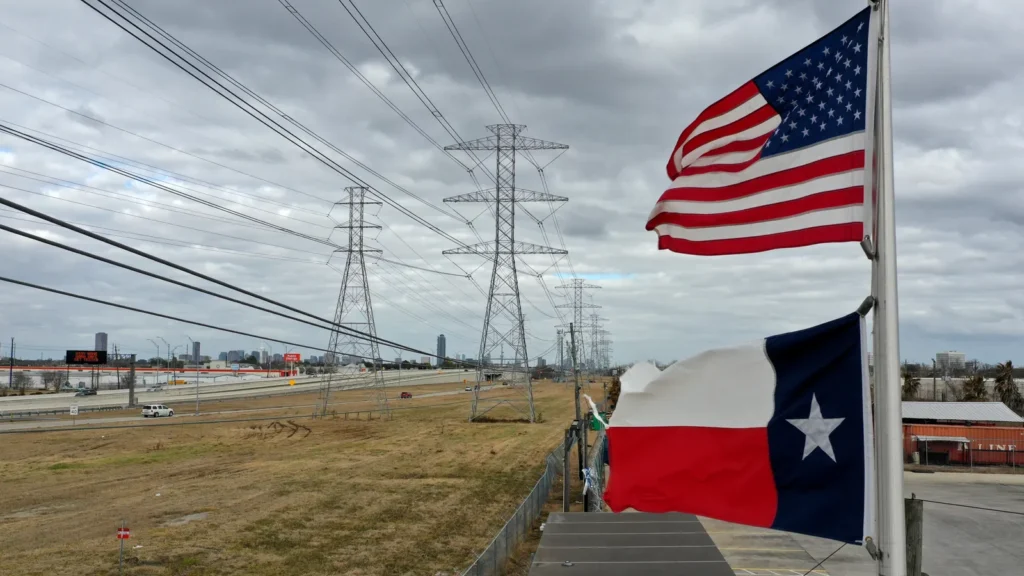
Texas isn’t just building a transmission line. It’s deciding how to power its next economic chapter.
For many Central Texas landowners, the Bell County East–Big Hill transmission project is about one thing: protecting their property.
For ERCOT planners and utility companies, it’s about something entirely different: making sure the Texas electric grid can support the next generation of economic growth.
Both perspectives are legitimate. That is why the debate surrounding the proposed 765-kilovolt transmission line has become far more than a disagreement over utility infrastructure. It has evolved into a broader conversation about the future of Texas, who benefits from that future, and who ultimately bears its costs.
For decades, expanding the electric grid generally meant keeping pace with population growth.
New neighborhoods needed electricity.
New schools needed electricity.
New businesses needed electricity.
Today’s challenge is fundamentally different.
Texas is now preparing for industrial facilities that consume extraordinary amounts of power around the clock. Data centers supporting artificial intelligence, cryptocurrency mining operations, electrified oil and gas production, and emerging hydrogen projects are driving electrical demand at a scale that simply did not exist a decade ago.
According to ERCOT forecasts, electricity demand in the Permian Basin alone could reach more than 23 gigawatts by 2030 and continue climbing beyond that. To put that into perspective, the region is projected to consume roughly one-third of the current peak demand across the entire ERCOT system.
Whether those projections ultimately prove accurate remains to be seen. But Texas policymakers are making infrastructure decisions today based on where they believe demand will be tomorrow. That distinction is important as the state is no longer simply reacting to growth; it is attempting to build ahead of it.
For Bell County residents, the obvious question is simple:
“What does this have to do with us?”
The answer is geography. The proposed Bell County East Switch, located southeast of Temple, would become one end of a nearly 200-mile transmission corridor stretching toward the Permian Basin. Rather than serving only local communities, the project is intended to move enormous quantities of electricity across Texas, connecting energy generation in West Texas with growing demand throughout Central Texas and beyond.
In many ways, Bell County is becoming an electrical crossroads. Much like an interstate highway moves freight across the country, extra-high-voltage transmission lines move electricity between regions. Most of that power will not be generated in Bell County. Much of it will not even be consumed here. But Bell County sits at one end of a corridor state planners believe is increasingly necessary.
The Opposition Is About More Than Transmission Towers
It is easy to characterize opponents as simply resisting change. That would oversimplify the debate. Many landowners are not arguing that Texas should stop growing or that reliable electricity is unnecessary. Instead, they are asking difficult questions about how growth should occur.
Should utilities make greater use of existing rights-of-way?
Should public lands absorb more of the impact?
Should private property owners shoulder the burden of statewide infrastructure projects?
Should projects of this magnitude move through an expedited regulatory process?
These are policy questions, not engineering questions. Opponents also point to concerns over property values, agricultural operations, environmental impacts, and the permanent visual footprint of transmission towers that may exceed 170 feet in height. Those concerns have led to organized resistance from landowners, county governments, and conservation organizations across the proposed route.
Whether readers agree with those arguments or not, they reflect genuine concerns from communities that would live alongside the infrastructure long after construction ends.
Perhaps the most interesting development is that the debate has expanded beyond utilities and landowners. State lawmakers have begun questioning whether Texas is moving too quickly. Some legislators have called for delaying portions of the project until lawmakers have an opportunity to revisit the state’s broader energy strategy.
Their concern is not necessarily that transmission is unnecessary. Instead, they argue that Texas risks spending billions of dollars moving electricity around the state without simultaneously ensuring enough reliable electricity is actually being generated.
Governor Greg Abbott has also entered the conversation, directing regulators to ensure that large industrial users, including data centers, bear more of the infrastructure costs associated with their electrical demands rather than shifting those costs onto residential ratepayers.
That represents an important shift. The debate is no longer simply about where the transmission line should go. It is becoming a debate over who should pay for Texas’ economic expansion.
At first glance, the Bell County East–Big Hill project appears to be a story about steel towers, transmission corridors, and utility regulation. In reality, it represents something much larger. Texas is attempting to prepare its electrical system for an economy increasingly driven by artificial intelligence, advanced manufacturing, energy production, and other power-intensive industries. Those industries promise jobs, investment, and economic growth. They also require infrastructure, and infrastructure inevitably affects someone.
For Bell County, the proposed transmission line serves as a reminder that local communities often become part of statewide—and even national—economic strategies.
Oncor has made a clear argument for why Texas needs additional high-capacity transmission infrastructure: projected demand is rising, the Permian Basin faces reliability concerns and the existing grid was not built for the scale of industrial growth now anticipated.
Its response also confirms the central tension identified in The Directory News’ original analysis. The project is designed to produce statewide benefits, while its physical impact will be concentrated along a route crossing private property and local communities.
Oncor says Bell County will benefit from a stronger ERCOT system, landowner compensation and additional taxable infrastructure. It has not yet quantified those local benefits, explained why Bell County East was selected over other possible endpoints or estimated how much local revenue the completed project would generate.
That does not establish that the project is unnecessary.
It means the larger engineering case has been made more clearly than the local one.
As the PUCT considers the final route, Bell County residents deserve both: an explanation of why Texas needs the line and a measurable accounting of why this community should bear its share of the impact.
The ultimate decision on the project’s route will determine where the towers are built. But the larger debate will continue long after that decision is made.
Texas is deciding not only how to deliver electricity.
It is deciding how it intends to grow.