
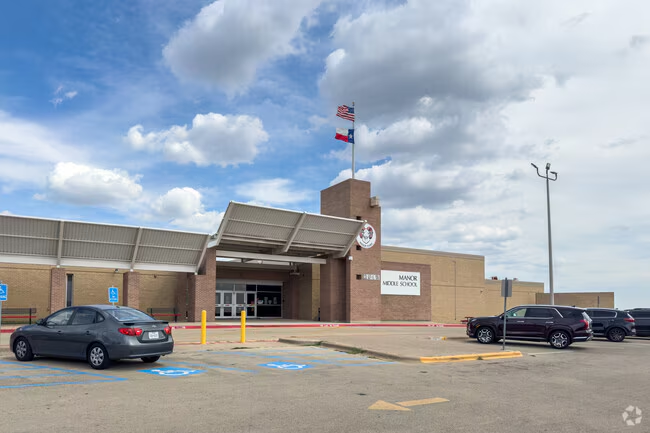
KILLEEN, TX — In the hallowed, often stifling halls of the Killeen Independent School District’s central office, a decision was reached this spring that has sent tremors through the limestone bedrock of Bell County. The Board of Trustees, acting not with the zeal of revolutionaries but with the grim resignation of a captain ordering a controlled scuttle, has handed the keys of Manor Middle School to Third Future Schools, a charter-operating partner.
To the casual observer, fueled by the rapid-fire hysteria of the digital age, this is a “takeover.” To those who understand the mechanics of power in the state of Texas, it is a surrender to reality.
The Guillotine of Senate Bill 1882
The narrative escaping into the wild suggests a voluntary flirtation with privatization. The record, however, tells a different story. Manor Middle School has languished under the weight of failing state accountability ratings for years—a chronic academic insolvency that, under the unforgiving eyes of the Texas Education Agency, carries a terminal sentence.
By invoking the provisions of Senate Bill 1882, Killeen ISD is not “selling out”; it is purchasing time. The law allows a district to partner with an outside entity to secure a two-year reprieve from state sanctions. Without this move, the state does not merely take over a school; it can dissolve the entire locally elected Board of Trustees, replacing them with a state-appointed board of managers.
We are witnessing the “Mission to Civilize” being outsourced because the local institution failed its primary duty: to educate.
The Human Cost of The Standard
The most visceral outcry centers on the “re-interview” mandate for Manor’s faculty. The critics call it a mass firing. The truth is an exercise in cold, clinical accountability. Third Future Schools operates on a model that demands high-performance metrics in exchange for higher compensation—a meritocracy that is anathema to the traditional tenure-based security of the public sector.
Teachers not selected for the new regime are not being cast into the street; they are being reassigned within the district. But the message is clear: The Standard was not being met, and in the old-world view of journalism and governance, failure must have consequences.
A Civic Duty or a Business Deal?
There is a historical irony here that would not be lost on the likes of Ma Ferguson or the reformers of the mid-century. We have traded the autonomy of the local schoolhouse for the promise of “improved student outcomes” managed by a distant entity. It is a clinical solution to a moral problem.
The question for the citizens of Bell County is not whether the Board “sold out,” but why the institution was allowed to decay to the point where such a radical amputation was the only way to save the patient.
Public institutions do not fail overnight. They fail through a thousand small concessions to mediocrity. The role of the press is to document the final invoice.